

Author’s Note
Thank you for following along so far. If you’re just jumping in here without reading the earlier chapters, this one, along with Chapter 9, “Wrestling” , might feel a little different. These chapters don’t focus as directly on growing up in a queer household. Instead, they explore what it was like to be a young man trying to find his way in a world that felt endlessly confusing.
I knew I couldn’t stay hidden forever in the safety and security of my home. Wrestling and music became ways to navigate that outside world. To test myself, to seek belonging, and to make sense of my own identity. These stories set the stage for what comes next.
As always, thank you for your love and support. Please continue to share these stories with anyone who might need to hear them.
Now, back to the story…
As I moved deeper into my teenage years, my confusion grew louder.
I didn’t understand why the world treated my family with suspicion or hate.
I didn’t understand my own questions about faith, belonging, and identity.
I couldn’t always say what I was feeling, but sometimes, I could hear it in a song.
Music at Home
Music has always been a part of my life.
It started with my mother. She was always singing, playing guitar, or dancing through the house with music in the background. She loved it, and her joy made it part of the air we breathed.
I don’t think musical talent is inherited. If it were, I should have had a double dose. My mom was gifted with both guitar and voice.
Her brother, my Uncle Tony, is the most naturally talented musician I’ve ever known. I’ve watched him hear a song for the first time, walk over to a piano, and play it as if he’d known it forever.
My grandfather played piano, and my great-uncle Joe was an accomplished opera singer. That’s a long line of talent, but none of it landed on me.
What did pass down was the love of music.
It was constant in our home. My mom loved Tina Turner, Joan Armatrading, The Eagles, Simon & Garfunkel, Cat Stevens, Jim Croce, folk songs, and soul. Anything that moved her.
And from her, I learned that whatever spoke to you mattered.
She never told me my tastes were silly or wrong.
That openness became a gift.
Discovering My Own Music
I remember having a couple of Kiss albums when I was younger. They were fun, but I didn’t love them.
As I got older and we moved into the townhouse, music became part of my identity.
Some of it I listened to just because of the energy, bands like Men at Work and Billy Idol.
But when I turned fourteen, I discovered my band: Depeche Mode.
The first song that grabbed me was People Are People.
I can still remember hearing those lyrics questioning why people hate each other for their differences and thinking, “Yes, this is my question too.”
It was like someone had stepped inside my head and said out loud what I had been carrying silently.
That Christmas in 1985, I asked my mom for their album Some Great Reward.
She tucked the cassette into my stocking, and on Christmas Eve night, after opening our gifts, we listened to it together.
From then on, I wore it out on repeat.
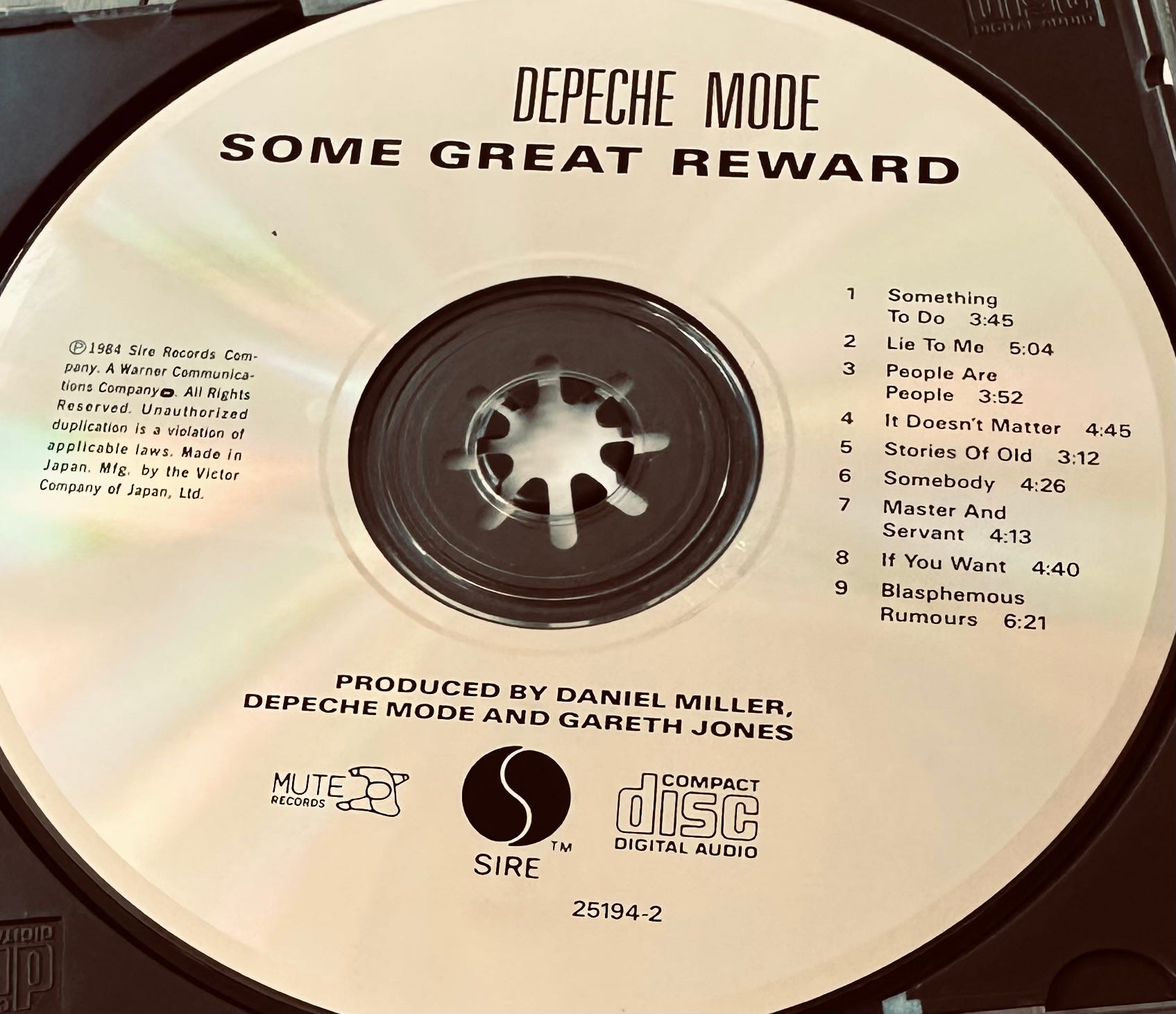
Each song seemed to reach into a different corner of me.
The song Somebody gave voice to my longing for connection and understanding.
Blasphemous Rumours echoed the doubts I felt about religion and the way faith was used in the world around me.
The music didn’t solve anything, but it let me know I wasn’t alone.
Martin Gore, the band’s songwriter, became a lifeline.
He wrote like he knew me, like he had walked through the same confusion.
His words told me I wasn’t broken. I was human.
By the time Black Celebration came out in the spring of 1986, I was hooked.
That summer I saw Depeche Mode at Merriweather Post Pavilion in Columbia, Maryland, and that night stamped something permanent on me.
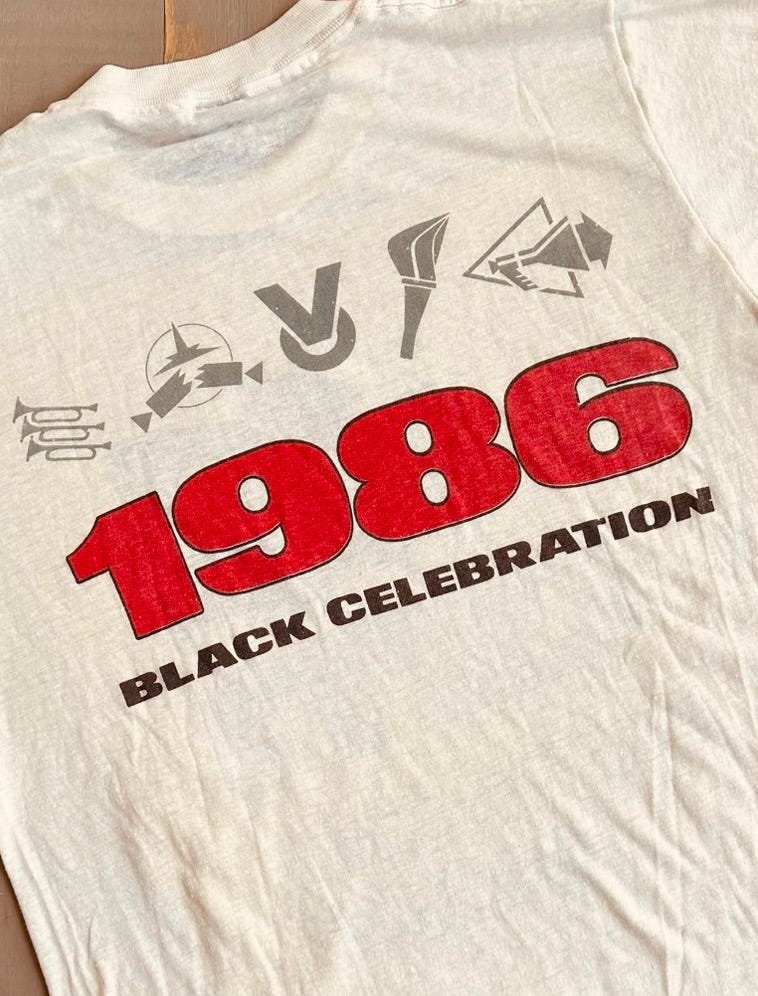
Their music didn’t make my problems disappear, but it gave me a way to hold them.
More Than Noise
New wave opened the door even wider.
The Cure.
The Smiths.
Yaz.
R.E.M.
U2.
New Order.
INXS.
Simple Minds.
Their sound was moody, strange, sometimes haunting. And that was the point.
It told me maybe I wasn’t so weird after all.
Or maybe I was, but that was okay.
I dove in fully.
I listened to WHFS 99.1 FM nonstop. It was the local Baltimore, Washington, and Annapolis alternative station.
I haunted record stores for new albums.
I stayed up for MTV’s 120 Minutes, soaking in videos from The Cure, The Smiths, and New Order.
And I didn’t just listen, I lived it.
I dyed and bleached my hair.
I pierced my ears (first one, then both, then a second hole).
I wore parachute pants, “punker” clothes, and yes, sometimes eyeliner.
Today dressing like that might not shock anyone, but in the 1980s it was extreme.
If the world wanted to tell me I didn’t belong, I was going to prove them right.
Mirror, Compass, and Drift
Music became both mirror and compass.
It reflected my confusion back to me, but it also pointed me toward belonging, even if that belonging wasn’t always in the right places.
So, as the wrestling season wrapped up in my sophomore year, spring of 1987, life actually looked pretty good on the surface.
Things were steady at the townhouse with my mom.
I had fallen in love with wrestling and found a place on the mat.
I had discovered Depeche Mode and the whole world of alternative music.
I was making new friends, becoming more popular, and even starting to feel a little better about myself.
But the conflicts inside me were still there, even in the wrestling room.
That spring, my friend Julie told me her friend Andrea needed a date to the senior prom.
She introduced us, and I said yes without hesitation.
Little did I know that saying yes would change the trajectory of my life.
Andrea wanted us to get to know each other before prom, so we went out to dinner.
Afterward she asked if I wanted to come back to her house and hang out for a while. Of course I agreed.
We pulled up to her place in Maryland City on a warm spring evening.
It was already dark, the air was soft, and I felt like I was in a scene from a movie, walking beside a beautiful girl, not sure where the night might lead.
As we got out of the car, Andrea looked up the street.
“Oh, look, there’s my brother and his friends,” she said.
“Do you want to meet them?”
We started walking toward them, and soon I could hear music spilling down the block.
I didn’t recognize it at first, but I know it by heart now. The band was The Cure, the album Standing on a Beach.
As we got closer, the sound grew louder, and then I saw them: her brother and his friends, punkers through and through.
The strange, weird kind of people I was slowly becoming.
Andrea introduced me to Mike, Rick, Gary, Diane, and Tina.
They were older than me, but I didn’t really notice.
What I saw was a group of people who looked like I felt.
They welcomed me immediately, pulled me into their circle, and made me feel like I belonged.
What I didn’t realize then was that they were just another group of lost souls, searching for a place in a world that didn’t understand them, just like me.
And for the next year and a half, they would become my closest friends.
The Drift Begins
Music gave me the courage to be different, but it also gave me the identity of an outsider, a freak, a weirdo, a misfit.
At first, that identity felt like strength.
But being an outsider also meant drifting away from the safety and security of my mom, Sue, and our chosen family.
They had given me stability and love, but I was looking for my own place in the world.
And the further I drifted from their stability and love, the more lost I became.
In Closing
Music had started as an anchor, helping me make sense of my confusion.
It gave me a way to quiet the noise and feel seen when nothing else did.
But somewhere along the way, the very thing that gave me courage also gave me permission to drift further and further from home.
I didn’t see it happening at the time.
I only knew that music gave me the strength to claim an identity. To stand out, to be different, to be an outsider.
And here’s the problem with being an outsider:
You start to attract others just like you.
And when you walk through the world alongside people with no direction, you can get lost very quickly.
That’s what we’ll talk about next, how the search for belonging pulled me deeper into a world I wasn’t ready for, and how the drift that started with music would lead me to places I never imagined.